

Bleached hair in Singapore is already fighting against humidity, heat, and UV exposure every single day — the last thing it needs is a shampoo stripping away what little moisture remains. Choosing the right shampoo is not a cosmetic decision; it is a structural one. Get it wrong and you accelerate breakage, brassiness, and porosity. Get it right and your colour stays vibrant, your bonds stay intact, and your hair actually feels like hair.
Best Shampoo Bleached Hair Singapore: the best shampoo for your hair depends on your hair type, colour treatment history, and scalp condition — sulphate-free formulas are generally recommended for colour-treated hair in Singapore's humid climate.
- This guide covers everything you need to know about best shampoo bleached hair singapore in Singapore
- Singapore's climate makes this topic especially relevant for local hair and skin care
- Products like the Rehues Colour Lock Shampoo are formulated specifically for these conditions
📣 As Seen on Reddit
"You can always buy some toning shampoo to maintain your color. Recommend Rehues."
— r/askSingapore community member, in response to a thread on bleached hair care in Singapore's climate. View thread →
Quick Answer: What to Look for in a Shampoo for Bleached Hair in Singapore
- Choose sulphate-free formulas — sulphates (SLS/SLES) lift the cuticle and accelerate colour fade
- Look for bond-repairing actives like hydrolysed keratin, amino acids, or bis-aminopropyl diglycol dimaleate
- Moisturising agents (hyaluronic acid, panthenol, glycerin) are non-negotiable for Singapore's dehydrating air-conditioning environment
- Avoid alcohol-heavy and clarifying shampoos unless doing a deliberate reset
- pH-balanced formulas (4.5–5.5) keep the cuticle sealed and colour locked
Stat: Bleaching raises hair porosity by up to 60%, making colour molecules and moisture escape far faster than in unprocessed hair. (Journal of Cosmetic Science)
If you have ever washed your freshly bleached hair and watched the water run faintly yellow or orange down the drain — that is not your imagination. That is your colour, leaving. Most shampoos are not designed for the structural reality of bleached hair. They are designed to clean. And while clean sounds like a good thing, the wrong kind of clean — the kind that strips oil, protein, and colour in one efficient lather — is what turns a great salon result into a brassy, brittle mess within three weeks.
In Singapore, the stakes are higher than most people realise. Our climate adds variables that salons in cooler countries simply do not account for. The combination of intense humidity, UV exposure, and the artificial cold of air-conditioned offices creates a uniquely hostile environment for chemically treated hair. Understanding why — and choosing a shampoo accordingly — is the difference between hair that holds its colour for eight weeks and hair that fades in two.
What Bleaching Actually Does to Your Hair (And Why It Changes Everything)
To choose the right shampoo, you need to understand what bleaching has actually done to your hair. The bleaching process uses an oxidising agent — typically hydrogen peroxide — to break down the natural melanin pigment inside the cortex. This process is inherently destructive. It does not just remove colour; it breaks disulphide bonds, the structural links that give hair its strength and elasticity. It raises the cuticle — the outer protective layer — and in many cases, it stays raised. And it dramatically increases porosity, meaning your hair absorbs and loses moisture (and colour) far more rapidly than it should.
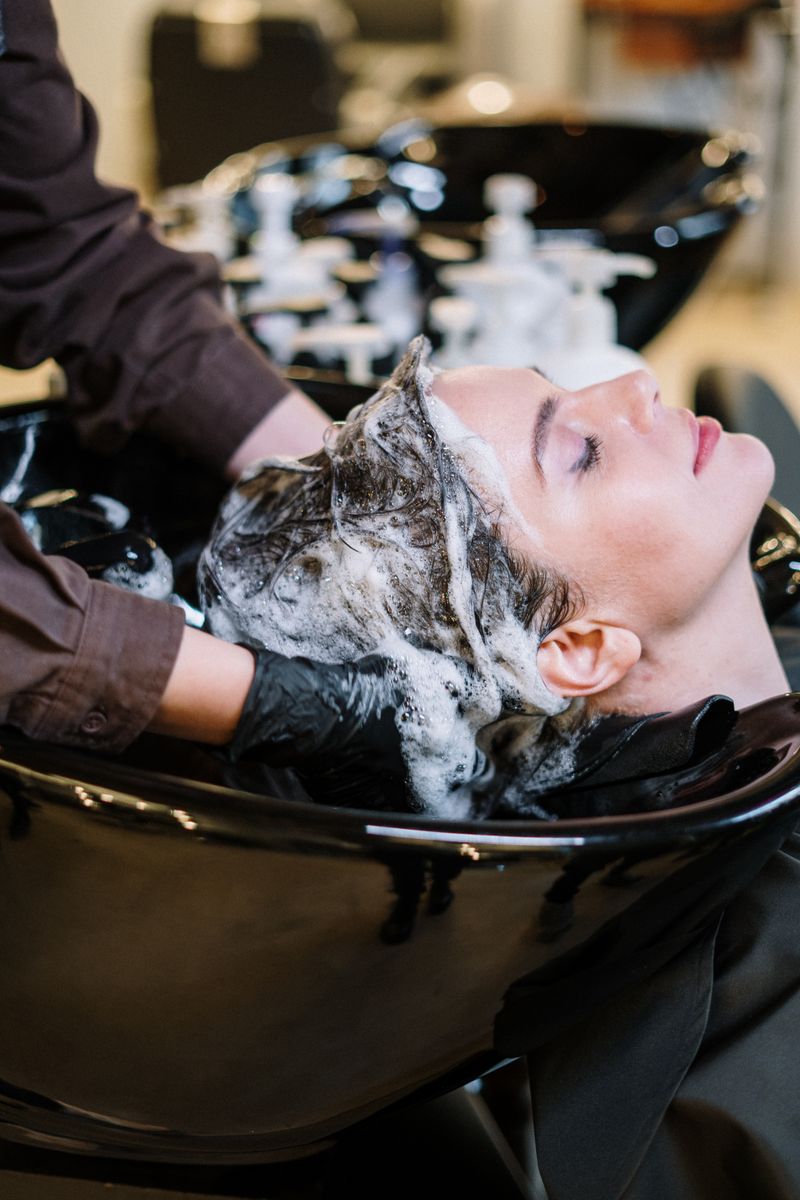
The result is a strand that is simultaneously thirsty and leaky. It pulls in humidity and then loses it just as fast. It grabs toner beautifully in the salon chair and then releases it within days of washing. It feels soft when wet and snaps when dry.
This is the reality your shampoo needs to address.
The Cuticle Problem — Why Your Shampoo's pH Matters More Than You Think
Healthy hair has a natural pH of around 4.5 to 5.5 — slightly acidic. The bleaching process temporarily raises this pH significantly, forcing the cuticle open. A well-formulated colour-care shampoo will have a pH in that same 4.5 to 5.5 range, which helps the cuticle lie flat, seals in colour, and reduces friction between strands. Most generic drugstore shampoos sit at a pH of 6 to 7 — seemingly innocuous, but enough to keep the cuticle partially lifted, accelerating both colour fade and moisture loss.
Check your current shampoo. If the brand cannot tell you its pH, that is telling.
Sulphates: The Single Biggest Mistake Bleached Hair Owners Make
Sodium lauryl sulphate (SLS) and sodium laureth sulphate (SLES) are surfactants — they create the lather that feels like it is doing something. And it is doing something: it is stripping your scalp's natural sebum, pulling colour molecules out through the raised cuticle, and leaving bleached hair more porous with every wash.
The bleaching process already disrupts the hair's lipid layer — the thin oily coating that seals the cuticle. Sulphate shampoos strip whatever remains. For unprocessed hair, this is unpleasant. For bleached hair, it is genuinely damaging.
The shift to sulphate-free is not a trend. It is chemistry.
How Singapore's Climate Specifically Impacts Bleached Hair
Singapore sits at roughly 1 degree north of the equator. Average humidity hovers between 70 and 90 percent. UV Index regularly hits 11 to 12 — the extreme category. And almost every indoor environment runs air-conditioning at 19 to 22 degrees Celsius for extended periods.
For bleached hair, this creates a particularly brutal cycle. Step outside: humidity swells the hair shaft, opens the cuticle, and accelerates colour and moisture loss. Step inside: air-conditioning dehydrates the air and the strand simultaneously, causing brittleness. Repeat this several times a day, and your bleached hair is going through a constant expand-and-contract cycle that no product can entirely counteract — but the right shampoo can significantly minimise.
UV Exposure and Colour Fade in the Tropics
UV radiation is one of the primary drivers of colour oxidation in bleached and toned hair. In Singapore, our proximity to the equator means UV exposure is intense year-round — unlike Europe, where winter months offer genuine UV recovery time. This matters because UV rays break down colour molecules at the surface of the strand, particularly cool tones like ash, silver, and platinum that rely on delicate pigments.
A shampoo containing UV filters or antioxidants (look for ingredients like panthenol, vitamin E, or UV-absorbing polymers) provides an additional layer of protection that standard formulas simply do not offer.
Hard Water and Mineral Buildup
Singapore's tap water is processed and treated, but it does contain minerals. Over time, regular washing deposits mineral traces on the hair shaft — particularly calcium and magnesium — which can dull blonde or platinum tones and create a slightly greenish or yellow cast. A shampoo formulated with chelating agents (like EDTA or citric acid) helps remove these deposits without the aggression of a clarifying formula.
Key Ingredients to Look For in a Shampoo for Bleached Hair
Bond-Repairing Actives
The most significant advance in colour-care haircare in the last decade is the inclusion of bond-repairing technology. Ingredients like bis-aminopropyl diglycol dimaleate (the active in many professional bond-builders), hydrolysed keratin, and amino acid complexes work at the cortical level — literally reconnecting disulphide bonds that the bleaching process broke.
This is not marketing language. Multiple peer-reviewed studies have confirmed that maleic acid derivatives and amino acid treatments measurably reduce breakage in chemically treated hair. If your shampoo contains any of these actives, it is doing structural repair work every single time you wash.
Hydrating Agents for the Singapore Climate
Bleached hair needs humectants — ingredients that draw moisture from the environment into the hair shaft. In Singapore's humid outdoor climate, humectants like glycerin, hyaluronic acid, and panthenol are particularly effective. They work with the ambient humidity rather than against it.
However, balance is important. In very high humidity, overly humectant-heavy formulas can cause hygral fatigue — where the hair absorbs too much moisture, swells repeatedly, and becomes puffy and frizzy. Look for formulas that combine humectants with film-forming agents (like polyquaterniums or dimethicone alternatives) that seal without weighing fine hair down.
Proteins — But the Right Kind
Protein treatments are frequently recommended for bleached hair because they literally fill the gaps left by oxidative damage. However, there is a meaningful distinction between large-molecule proteins (which coat the surface and can lead to stiffness if overused) and small-molecule hydrolysed proteins that penetrate the cortex and deliver genuine structural benefit.
For a shampoo — which rinses out — look for hydrolysed silk, hydrolysed wheat protein, or hydrolysed keratin. These are small enough to do meaningful work in a rinse-off format.
What to Avoid
Sulphates (SLS/SLES): Already covered above — the single biggest enemy of bleached hair in a shampoo formula.
Alcohol denat (denatured alcohol): Common in volumising shampoos, it dries out already parched bleached strands.
Clarifying formulas: Once a month to remove mineral buildup — never as a regular shampoo for bleached hair.
Fragrance-heavy formulas: Synthetic fragrances are typically composed of dozens of undisclosed chemicals, some of which are sensitising. Bleached scalps are already more reactive; heavy fragrance is an unnecessary stressor.
High pH formulas: As discussed — anything above 5.5 keeps the cuticle raised and accelerates everything you are trying to prevent.
How Often Should You Shampoo Bleached Hair in Singapore?
This is one of the most common questions, and the honest answer depends on your scalp type. As a general principle, every two to three days allows the scalp's natural oils to condition the mid-lengths and ends — particularly valuable for bleached hair that cannot produce sufficient lipid coverage on its own.
If you exercise regularly (common in Singapore's fitness culture), or if your scalp is naturally oily, co-washing — washing with conditioner only, skipping shampoo — on off days can maintain hygiene without stripping.
The instinct to shampoo every day comes from feeling the hair become oily. For bleached hair, resist it where possible. Natural oil is not your enemy. Sulphate shampoo every day is.
How Rehues Addresses the Bleached Hair Challenge
Rehues was developed specifically for the colour-treated hair reality in Singapore. The entire formulation philosophy centres on what bleached and toned hair actually needs — not what sells well in mass-market retail. The Rehues shampoo is sulphate-free, pH-balanced, and formulated with bond-supporting actives that work from the first wash rather than requiring weeks of build-up.
Critically, Rehues incorporates colour-depositing technology. This means every wash is doing two jobs: cleaning gently without stripping, and refreshing the tonal deposit on your bleached or toned hair. For Singapore customers maintaining platinum, silver, ash blonde, or pastel tones, this eliminates the constant slide toward brassiness that standard shampoos accelerate.
The Rehues 3-step Colour Lock™ Ritual — shampoo, conditioner, treatment — is designed as a complete system. Each step builds on the last, and the shampoo is specifically engineered to complement the subsequent conditioning and treatment steps rather than undoing their work.
How Rehues Compares to Other Options on the Market
Several well-regarded international options are available to Singapore consumers. Olaplex No.4 Bond Maintenance Shampoo is sulphate-free and includes bis-aminopropyl diglycol dimaleate — the same bond-repair active at the core of the Olaplex system. It is an effective shampoo, though it does not include colour-depositing properties, meaning tonal maintenance requires a separate product. Redken Acidic Bonding Concentrate Shampoo focuses on acidity and bond strength, using citric acid to balance pH and strengthen weakened hair — a solid performer, particularly for high-porosity hair. Schwarzkopf BC Bonacure offers a broad range under its repair umbrella, with decent moisturising performance at accessible price points, though formulations vary across the range.
Where Rehues differentiates is in the combination of bond repair, sulphate-free cleansing, and active colour deposition in a single product — removing the need for an additional toning shampoo or colour-refresh treatment in your routine. For Singapore customers managing bleached colour between salon visits, this consolidation has real practical value.
Disclaimer: Brand names mentioned are for comparison purposes only. Rehues is not affiliated with any third-party brands referenced.
The Right Shampoo Is the Foundation of Colour-Treated Hair Care
Bleached hair does not fail because you used the wrong mask or skipped a treatment once. It fails because the foundation — the shampoo you use two or three times a week, every week — is working against it. In Singapore's climate, with its UV intensity, humidity swings, and air-conditioning exposure, the margin for error is narrower than in most countries.
Choosing a sulphate-free, pH-balanced, bond-repairing formula is not a premium upgrade — it is the baseline your bleached hair needs to survive and hold its colour. Rehues was built for exactly this environment and exactly this type of hair. Explore the full Colour Lock™ Ritual at rehues.com and stop letting your shampoo undo your colour work.
FAQ
What is the best shampoo for bleached hair in Singapore's humid climate?
The best shampoo for bleached hair in Singapore is sulphate-free, pH-balanced between 4.5 and 5.5, and contains bond-repairing actives like hydrolysed keratin or amino acid complexes. Singapore's combination of high humidity outdoors and dry air-conditioning indoors creates a challenging environment for bleached hair, making moisture-retaining and cuticle-sealing formulas especially important. Rehues is formulated specifically for this climate, combining sulphate-free cleansing with bond support and colour-depositing technology.
Why does bleached hair go brassy so quickly after washing in Singapore?
Bleaching raises the hair's porosity and lifts the cuticle, allowing colour molecules — particularly cool-toned pigments like ash and silver — to escape rapidly during washing. In Singapore, UV exposure and humidity accelerate this further by opening the cuticle and oxidising colour molecules. Using a sulphate-free shampoo with colour-depositing properties helps replenish tonal deposit with every wash, slowing the drift toward brassiness.
How often should I wash bleached hair in Singapore if I exercise regularly?
If you exercise frequently in Singapore's heat, aim to shampoo bleached hair no more than every two days. On non-shampoo days, rinse with cool water or co-wash (conditioner only) to remove sweat without stripping colour and moisture. This preserves the hair's natural lipid layer, which bleaching has already compromised.
Is sulphate-free shampoo actually necessary for bleached hair, or is it just marketing?
It is genuinely necessary. Sulphates (SLS and SLES) are aggressive surfactants that strip the hair's lipid layer, lift the cuticle, and accelerate colour fade — all of which are particularly damaging to bleached hair that has already lost structural integrity. Multiple dermatological and cosmetic science studies confirm that sulphate-free formulas reduce mechanical damage and colour loss in chemically treated hair. This is chemistry, not marketing.
Can I use a colour-depositing shampoo on bleached hair every wash in Singapore?
Yes, for most bleached or toned hair types. Colour-depositing shampoos are formulated to deposit a mild tonal pigment that refreshes colour between salon visits without over-saturating. In Singapore, where colour fades faster due to UV and humidity, using a colour-depositing sulphate-free shampoo like Rehues with every wash helps maintain tone consistency and reduces how frequently you need professional toning treatments.
For hair product safety guidance in Singapore, the Health Sciences Authority (HSA) maintains a list of regulated cosmetic ingredients and approved products.
The Bottom Line
Understanding best shampoo bleached hair singapore is the first step to making better choices for your hair. With Singapore's climate adding extra challenges, using the right products and routines makes a measurable difference. Explore the Rehues range — formulated specifically for colour-treated hair in Singapore's conditions.