

Colour-treated hair in Singapore faces a uniquely demanding set of conditions: salon chemicals, tropical humidity, intense UV, air-conditioning desiccation, and the need to wash more frequently than in cooler climates. Getting the routine right doesn't require an extensive product collection — it requires the right products used correctly, in the right order. This is the complete routine guide.
Colour Treated Hair Care Singapore: colour-treated hair in Singapore requires sulphate-free, colour-safe products and more frequent deep conditioning to counteract the combined effects of chemical processing and tropical humidity.
- This guide covers everything you need to know about colour treated hair care singapore in Singapore
- Singapore's climate makes this topic especially relevant for local hair and skin care
- Products like the Rehues Colour Lock Shampoo are formulated specifically for these conditions
According to hair care research in humid tropical climates, colour-treated hair can lose up to 40–50% of its vibrancy within the first 4 weeks without sulphate-free, colour-protective maintenance — making consistent at-home care essential in Singapore's climate.
Quick Answer
- Wash with cool or lukewarm water — hot water opens the cuticle and accelerates colour fade significantly
- Shampoo only the scalp; allow rinse water to travel through lengths rather than aggressively lathering the ends
- Use a sulphate-free colour-protective shampoo like Rehues colour-lock every wash to prevent cumulative fade
- Deep condition weekly; a bond repair mask every two to four weeks maintains structural integrity between colour appointments
- Apply a UV-protective leave-in or serum before leaving the house — Singapore's UV index is consistently high year-round
Most Singapore women who colour their hair lose the battle gradually — the colour fades faster than it should, the hair becomes progressively drier and more brittle, and each salon visit starts from a worse baseline than the last. The culprit is almost always a routine that was designed for healthy, unprocessed hair rather than the specific biochemical needs of colour-treated strands. Here's how to build one that actually works in Singapore.
The Wash Routine: Where Most Colour Fades
How does water temperature affect colour-treated hair in Singapore?
This is the single highest-impact habit change most Singapore women can make for colour longevity. Hot water — the kind that feels satisfying after a long day — raises the hair's cuticle significantly. An open cuticle is precisely what allows colour molecules to escape from the cortex into the rinse water. You can see this yourself: rinse your hair after colouring with hot water and the water runs coloured for much longer than it does with cool water.
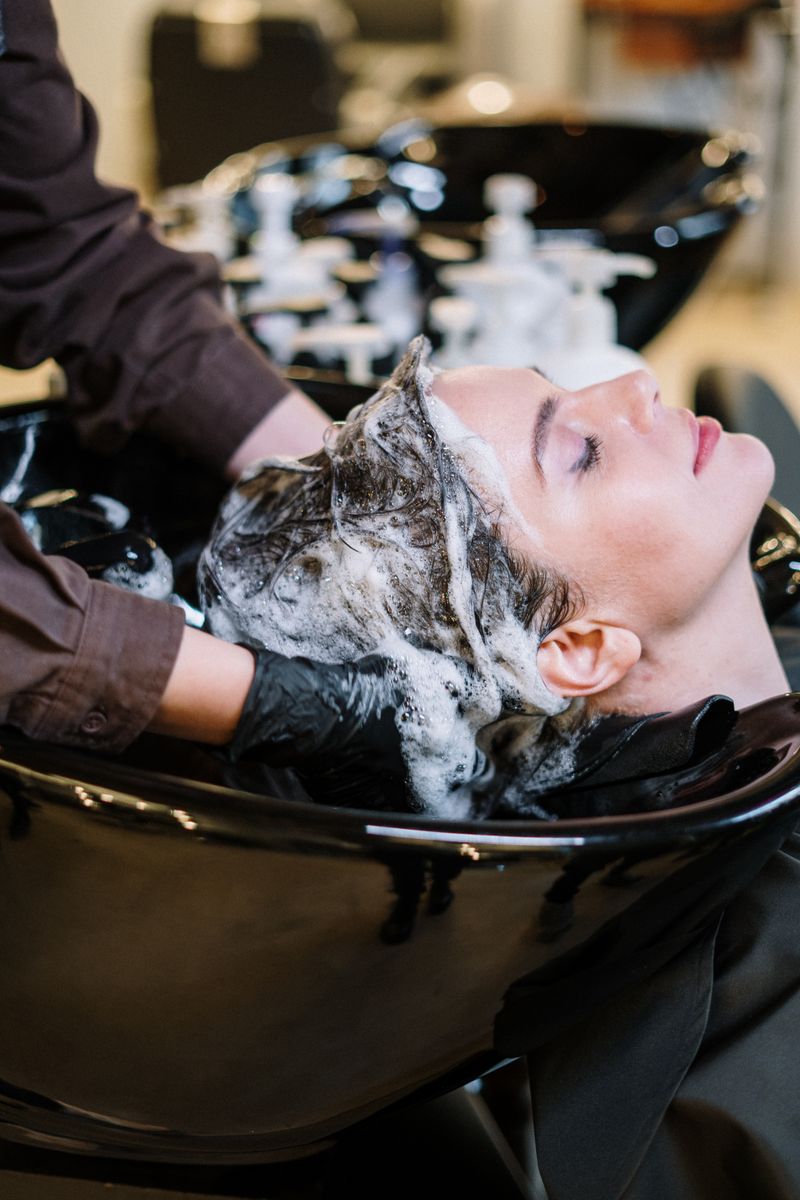
In Singapore's heat, the temptation to shower hot is understandably lower than in colder climates, which is actually an advantage. Commit to washing hair with cool to lukewarm water — not cold (which can cause scalp tension) but decidedly not hot. Finish every wash with a cool rinse, which closes the cuticle, seals in conditioning agents, and adds immediate shine. This single adjustment can extend colour vibrancy by one to two weeks per colour cycle.
How often should I wash colour-treated hair in Singapore?
Singapore's climate typically necessitates more frequent washing than the standard advice designed for cooler markets. The heat and humidity cause faster sebum production and sweat accumulation, making washing every one to two days a practical reality for most Singapore women rather than a choice. The key is ensuring that the formula used for frequent washing is gentle enough not to strip colour or compromise the scalp barrier.
Rehues colour-lock shampoo is specifically formulated to be suitable for Singapore's shampooing frequency — gentle enough for every-other-day use without accelerating colour fade or disrupting the scalp's acid mantle. Applying it only to the scalp and allowing rinse water to carry the formula through the lengths (rather than aggressively scrubbing the ends) further reduces colour loss and mechanical damage per wash. Browse the Rehues shampoo range to find your match.
Conditioning: Moisture Lock After Every Wash
Colour-treated hair is more porous than untreated hair — the chemical processing that deposits colour also opens the cuticle structure, leaving micro-gaps that allow moisture to enter and exit more readily. In Singapore's humidity, this means colour-treated hair will absorb ambient moisture during the day (causing frizz and cuticle swelling) and lose it rapidly when inside air-conditioned spaces. A rinse-out conditioner after every wash is non-negotiable for managing this porosity.
Choose a conditioner with ceramides, amino acids, and panthenol that specifically addresses colour-treated hair's needs. Apply from mid-length to ends, leave for two to three minutes, and rinse with cool water. For hair that is moderately to heavily processed, a leave-in conditioner applied to damp hair before styling adds another layer of moisture protection that holds up through Singapore's humid day.
Weekly Treatments: The Engine Room of Long-Term Colour Health
Daily and every-other-day washing maintains cleanliness, but it is the weekly treatment routine that determines the long-term trajectory of colour-treated hair health in Singapore. A weekly deep conditioning mask — applied to freshly shampooed, towel-dried hair, left for 20–30 minutes with a shower cap for heat retention — replenishes the moisture, protein, and ceramides that daily washing and environmental exposure deplete.
Rehues deep conditioning masks are formulated for the protein-moisture balance colour-treated hair needs in Singapore. Alternating between a moisture-focused mask and a bond-repair mask every two weeks addresses both the dehydration that Singapore's climate accelerates and the structural bond damage that accumulates between colour appointments. This two-mask rotation is one of the most effective weekly treatment strategies for Singapore women managing active colour. Visit rehues.com to explore the treatment range.
UV Protection: Singapore's Overlooked Colour Enemy
Singapore's UV index sits between 10–13 (extreme) for most of the year. UV radiation causes direct photodegradation of colour molecules — both natural melanin and synthetic colour — as well as protein oxidation within the cortex. The combined effect is colour that turns brassy or fades unevenly, alongside hair that becomes progressively weaker from UV-driven protein breakdown.
UV protection for hair is significantly underutilised in Singapore relative to its importance. A UV-filtering leave-in conditioner, hair serum with UV filters, or a physical protective layer (hat, umbrella) applied before outdoor exposure makes a measurable difference to colour longevity and structural health. For women who spend significant time outdoors in Singapore — whether commuting, exercising, or working — making UV protection a non-negotiable step in the morning routine is arguably as important for hair health as sunscreen is for skin.
Heat Styling: Frequency and Temperature Management
What temperature should I use for heat styling colour-treated hair in Singapore?
The scientifically appropriate temperature for most hair types is 180–200°C for coarser, thicker strands and 150–180°C for finer or more damaged hair. Many Singapore women use flat irons and curlers at 230°C — the maximum temperature — which consistently exceeds what their hair's current condition can safely tolerate, particularly if the hair is also chemically processed.
Reducing heat tool temperature from 230°C to 180–200°C, combined with a quality heat protectant applied before styling, dramatically reduces the cumulative thermal damage that compounds over weeks of daily styling. Heat protectants work by providing a sacrificial barrier between the metal plates and the hair shaft, absorbing thermal energy before it reaches the cortex. Apply to damp or dry hair before any heat tool contact — not an optional step for colour-treated hair in Singapore's demanding environment.
Night Routine: Protecting Colour While You Sleep
Cotton pillowcases create friction against the hair shaft during sleep — particularly for Singapore women who tend to sleep in air-conditioning that desiccates the hair overnight. This friction causes cuticle abrasion, tangling, and colour transfer to the pillowcase. Switching to a satin or silk pillowcase immediately reduces overnight friction damage. Sleeping with hair loosely braided or in a loose bun further reduces mechanical stress and tangling, particularly for longer hair.
A lightweight oil or serum applied to dry ends before sleep provides an occlusive layer that reduces overnight moisture loss from the ends — the most vulnerable and exposed part of colour-treated hair. A few drops of argan or jojoba oil worked through the ends takes thirty seconds and provides meaningful protection during Singapore's dry, air-conditioned nights.
Rehues Singapore
Hair Care Made for Singapore
Formulated for colour-treated hair in Singapore's heat and humidity. Shop Rehues today.
Shop Rehues →Conclusion: Consistency Is the Strategy
A complete colour-treated hair routine in Singapore isn't complicated — it's consistent. Cool water washing, sulphate-free colour-safe shampoo applied scalp-first, rinse-out conditioning after every wash, weekly deep treatment, UV protection before outdoor exposure, managed heat styling temperatures, and overnight protection form a complete system. Each element compounds the others. The Rehues range is built to slot into this system at every point — from colour-lock shampoo to bond repair masks to finishing serums — designed specifically for Singapore's climate and for hair that's been chemically coloured. Start at rehues.com and build the routine your colour deserves.
Frequently Asked Questions
How long does hair colour last in Singapore compared to other countries?
Colour typically fades faster in Singapore due to the combination of frequent washing (driven by heat and humidity), intense UV exposure, and warm ambient temperature. With a sulphate-free routine, cool water washing, and UV protection, vibrancy can be maintained for six to eight weeks — comparable to cooler climates.
Is it bad to wash colour-treated hair every day in Singapore?
Daily washing with a sulphate-free, colour-protective formula is manageable in Singapore's climate. The key is cool water temperature, scalp-focused application, and avoiding aggressive scrubbing of the lengths. Harsh formulas used daily will accelerate fade significantly.
What is the best way to reduce colour fading in Singapore's humidity?
Cool water washing is the single most impactful habit. Followed by sulphate-free shampoo, UV protection for outdoor exposure, and weekly deep conditioning. Each of these layers meaningfully extends colour vibrancy between salon appointments.
How often should I get my hair coloured in Singapore?
Most permanent colour touch-ups are needed every six to eight weeks for root regrowth, or eight to twelve weeks for all-over colour refresh. Semi-permanent colour fades faster, typically requiring refresh every four to six weeks. With a good maintenance routine, you can extend these intervals.
Does swimming in Singapore affect hair colour?
Yes, significantly. Chlorine in swimming pools oxidises colour molecules and damages the cuticle. Apply a leave-in conditioner or oil to hair before swimming to create a protective barrier. Rinse hair with fresh water immediately after leaving the pool, and deep condition that evening.
What hair care products are essential for colour-treated hair in Singapore?
The non-negotiables are: a sulphate-free colour-protective shampoo (such as Rehues colour-lock), a rinse-out conditioner, a weekly deep conditioning mask, a heat protectant for styling, and a UV-filtering leave-in or serum for outdoor protection in Singapore's sun.
Does Singapore tap water affect hair colour?
Singapore tap water is among the highest quality in the world (sourced and treated by PUB). It does not contain significant levels of chlorine or mineral deposits that would accelerate colour fade — unlike hard water cities where mineral build-up genuinely impacts colour. The water quality concern is less relevant for Singapore than for many other locations.
Can I colour my hair more frequently to combat Singapore's fast-fading?
Increasing colour frequency without addressing the root causes of fast fade will progressively damage the hair structure rather than solving the problem. Better to fix the routine first — cool water, sulphate-free products, UV protection — and extend the colour cycle rather than compensating with more chemical processing.