

Most Singapore women own at least one hair mask. Far fewer use them correctly — and that gap between ownership and proper application is the difference between a genuine treatment result and an expensive deep conditioning that barely penetrates the hair shaft. This guide covers how to use a hair mask properly for colour-treated hair in Singapore, including timing, technique, and what to look for when choosing the right formula.
Hair Mask Singapore: using a hair mask for colour-treated hair 1-2 times weekly replaces moisture and strengthens bonds damaged by chemical processing — look for formulas with keratin, collagen, or bond-repair actives.
- This guide covers everything you need to know about hair mask singapore in Singapore
- Singapore's climate makes this topic especially relevant for local hair and skin care
- Products like the Rehues Colour Lock Shampoo are formulated specifically for these conditions
According to hair care research in humid tropical climates, colour-treated hair can lose up to 40–50% of its vibrancy within the first 4 weeks without sulphate-free, colour-protective maintenance — making consistent at-home care essential in Singapore's climate.
Quick Answer
- Apply hair mask to freshly shampooed, towel-dried hair — not bone dry or soaking wet
- Section hair before applying for even distribution; don't dump product on top of wet strands
- Leaving a mask on for 20–30 minutes (with or without heat) delivers significantly more penetration than a 5-minute rinse-out
- For colour-treated hair: look for protein + moisture balance; avoid high-pH masks that open the cuticle and accelerate colour fade
- Rehues hair masks are formulated for colour-treated hair in Singapore's climate — deeply conditioning without stripping colour or overloading the hair shaft
The biggest hair mask mistake isn't choosing the wrong formula — it's application technique. You can have the most advanced mask on the market, but if you're applying it incorrectly, you're leaving most of its benefit on the surface of the hair rather than where it matters: inside the cortex. Here's how to do it properly.
How to Apply a Hair Mask Correctly for Colour-Treated Hair
What is the correct way to apply a hair mask in Singapore's humidity?
Start with freshly shampooed hair. This sounds obvious, but it's genuinely important: a mask applied to hair that already has product build-up, excess oil, or dry shampoo coating the cuticle will not penetrate effectively. The shampoo step removes the surface layer and partially opens the cuticle, allowing conditioning ingredients to enter the hair shaft more efficiently.
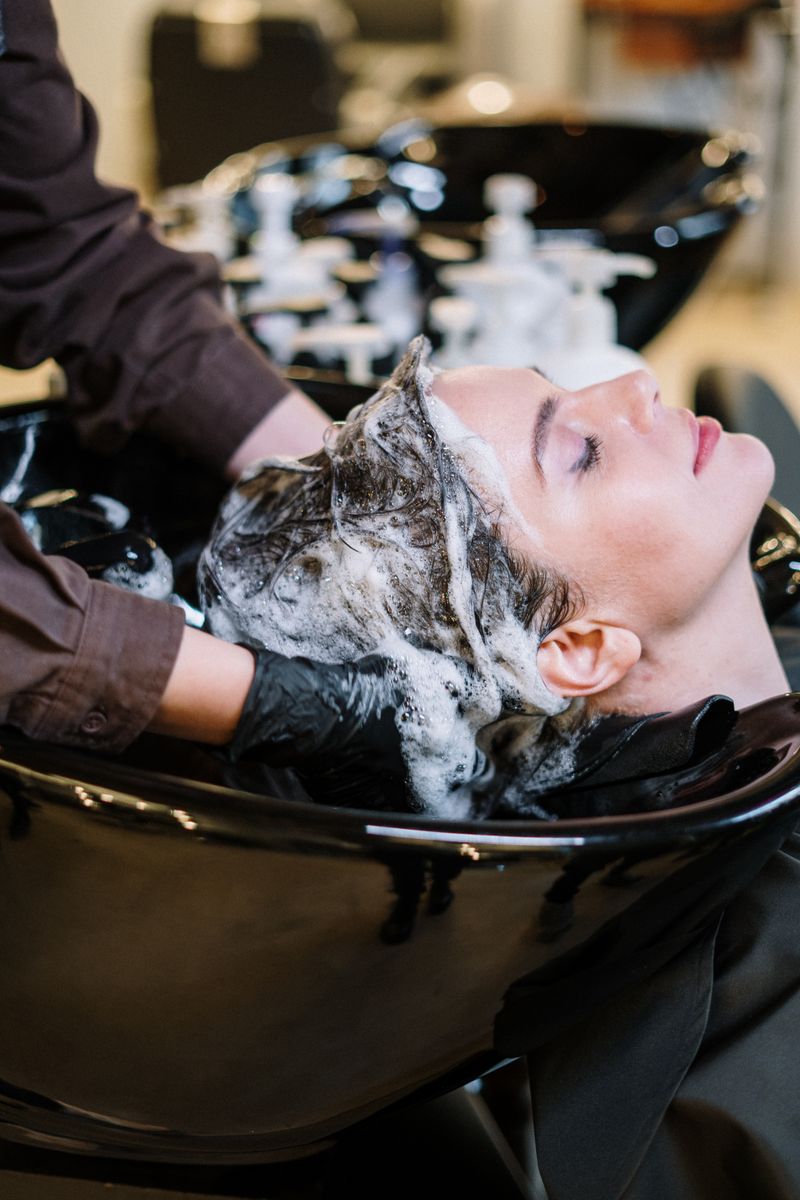
After shampooing, towel-dry gently by scrunching rather than rubbing. You want the hair damp — not dripping, not dry. Excess water dilutes the mask formula and washes active ingredients off before they can be absorbed. Bone-dry hair, conversely, has a tighter cuticle that resists penetration of water-based conditioning agents.
Section the hair into two to four sections depending on your hair's thickness. Apply the mask section by section, working from mid-length to ends. The scalp area rarely needs deep conditioning (the scalp produces its own sebum), and applying a rich mask directly to the scalp can cause congestion and weigh down roots. Focus the product where damage actually lives: the mid-lengths and ends, and specifically any area that has been bleached, coloured, or heat-styled frequently.
Use your fingers or a wide-tooth comb to distribute the mask evenly through each section. Apply generously — masks need a certain thickness to maintain contact with the hair shaft during processing time. A light coat won't deliver the same result as a thorough application, even if the total product used seems like a lot.
How Long Should You Leave a Hair Mask On?
This is where most people shortcut themselves. The instruction "leave on for 5–10 minutes" on a mask label is the minimum — not the optimum. At five minutes, surface-level conditioning ingredients have had time to coat the cuticle. But the deeper-acting ingredients — amino acids, ceramides, bond-repair actives — need more time to penetrate and work within the cortex.
For a standard conditioning mask with no bond-repair active, 15–20 minutes is a good baseline. For a protein-rich treatment or bond-repair mask, 20–30 minutes allows more meaningful structural work to occur within the hair shaft. For Rehues deep conditioning masks, the recommended processing time is calibrated to Singapore's climate — humid air around the hair during processing actually assists penetration by maintaining the hair shaft's pliability. Explore the Rehues mask range for the specific treatment that matches your hair's condition.
Heat accelerates the penetration of conditioning ingredients by further opening the cuticle and increasing molecular movement within the cortex. Wrapping your hair in a warm towel (heated for 30 seconds in the microwave, then wrung out) creates a gentle steam environment around the hair that meaningfully improves mask efficacy. Using a heated cap or shower cap and sitting in a warm shower environment achieves the same effect. In Singapore's ambient warmth, even simply covering with a shower cap provides some thermal benefit relative to an unprotected application in an air-conditioned room.
Can you leave a hair mask on too long in Singapore's climate?
For moisture-based masks: generally no. Leaving a conditioning mask on for a few hours or even overnight typically doesn't cause harm — the hair can only absorb so much. However, protein-heavy masks or treatments with high concentrations of hydrolysed keratin can cause protein overload if left on significantly longer than recommended — this presents as hair that feels stiff, rough, and unusually brittle after washing. Follow product guidelines for protein treatments more carefully than for moisture masks.
How Often Should You Use a Hair Mask in Singapore?
Frequency depends on your hair's current condition and how much chemical and heat processing it's under. As a general framework: once a week is appropriate for actively processed hair (colour-treated, regularly heat-styled, or chemically straightened) that is experiencing dryness, breakage, or reduced elasticity. Every two weeks is suitable for moderately processed hair in reasonable condition. Monthly use is enough for relatively healthy hair that's being maintained rather than rescued.
In Singapore, where the climate creates additional environmental stress on the hair shaft — UV exposure, humidity-induced cuticle swelling, air-conditioning desiccation — erring towards more frequent masking is generally beneficial rather than excessive. The exception is protein masks: these should be limited to once every two to four weeks depending on the hair's response, as protein accumulation can cause the brittleness described above.
What to Look for in a Hair Mask for Colour-Treated Hair
Ingredient quality matters far more than price point when choosing a mask for colour-treated hair in Singapore. The key things to look for are protein sources (hydrolysed keratin, hydrolysed wheat protein, amino acids) that penetrate the cortex and rebuild structural integrity; humectants (glycerin, panthenol, hyaluronic acid) that draw moisture into the shaft; emollients (shea butter, argan oil, jojoba) that seal the cuticle and provide slip; and ceramides that repair the lipid layer of the cuticle.
For colour-treated hair specifically, avoid masks with a high pH (above 6). A high pH opens the cuticle during processing, which allows deeper conditioning agent penetration but also allows colour molecules to escape more easily — accelerating fade. The best masks for colour-treated hair have a slightly acidic pH that allows adequate conditioning without aggressively opening the cuticle.
Rehues hair masks are pH-balanced for colour-treated hair, formulated without harsh sulphates or high-alkaline ingredients that would compromise colour longevity. The mask range is designed for the Singapore environment — where humidity management, colour protection, and moisture-protein balance all need to be addressed simultaneously. Visit rehues.com to find the right mask for your hair's specific condition.
Rehues Singapore
Hair Care Made for Singapore
Formulated for colour-treated hair in Singapore's heat and humidity. Shop Rehues today.
Shop Rehues →Conclusion: Technique Is Half the Formula
A hair mask is only as effective as the method used to apply it. For Singapore women managing colour-treated, bleached, or chemically processed hair — dealing with the additional stressors of UV, humidity, and frequent washing — correct masking technique is one of the highest-leverage interventions available. Section. Apply generously to mid-lengths and ends. Use heat. Give it time. And choose a formula that's matched to colour-treated hair's specific needs — pH-balanced, protein-moisture balanced, and free from ingredients that compromise colour longevity. Rehues masks are built with all of these requirements in mind. Shop at rehues.com to find yours.
Frequently Asked Questions
How often should I use a hair mask if I colour my hair in Singapore?
Once a week is appropriate for actively colour-treated hair experiencing dryness or damage. In Singapore's climate, where environmental stressors are ongoing, weekly masking maintains the moisture-protein balance needed to prevent breakage between salon visits.
Should I apply hair mask before or after shampooing?
After shampooing. Shampooing removes build-up and partially opens the cuticle, allowing conditioning ingredients to penetrate more effectively. Apply mask to freshly shampooed, towel-dried (damp, not wet or dry) hair.
Can I use a hair mask as a conditioner every day in Singapore?
Not recommended for protein-heavy masks — daily protein application can cause overload, making hair stiff and brittle. Moisture-only masks can be used more frequently, but a rinse-out conditioner is more appropriate for daily use. Reserve masks for their intended weekly or bi-weekly treatment role.
Does heat help hair masks work better in Singapore?
Yes. Heat — from a warm towel, heated cap, or simply covering with a shower cap in Singapore's ambient warmth — opens the cuticle and increases penetration of conditioning ingredients into the cortex. Even a modest thermal boost meaningfully improves treatment efficacy.
What is the difference between a hair mask and a deep conditioner?
The terms are often used interchangeably. In practice, deep conditioners are typically left on for 5–15 minutes and focused on surface conditioning. Masks tend to have a denser formula and are designed for 20–30+ minute processing to deliver deeper structural benefits. Processing time and formula concentration are the key distinctions.
Can I use a hair mask on my scalp?
Generally not recommended. Most hair masks are formulated for the hair shaft and contain rich emollients that can congest the scalp, disrupt sebum balance, and weigh down roots. Apply from mid-length to ends only. If you have scalp concerns, look for a dedicated scalp treatment product.
How do I know if my hair needs more protein or more moisture?
Wet a small section of hair and stretch it gently. If it breaks quickly without any elasticity, it likely needs protein. If it stretches significantly and feels mushy before snapping, it needs protein to provide structure. Hair with good balance stretches slightly then returns. In Singapore's humidity, bleached hair often needs both.
Are Rehues hair masks safe for colour-treated hair in Singapore?
Yes. Rehues hair masks are pH-balanced for colour-treated hair and formulated without harsh sulphates or high-alkaline ingredients that accelerate colour fade. They are designed specifically for the moisture-protein balance needed by Singapore women managing chemically processed hair.