

If you're in Singapore and your hair seems stuck at the same length no matter what you do, you're not imagining it. A combination of climate stress, chemical treatments, heat styling, and nutritional gaps creates a uniquely challenging environment for hair growth. Here's what's actually holding your hair back — and what to do about it.
Hair Growth Singapore: hair growth in Singapore can be impacted by stress, diet, heat, and scalp health — most cases of slow growth or shedding respond well to scalp care, reduced chemical processing, and protein-rich treatments.
- This guide covers everything you need to know about hair growth singapore in Singapore
- Singapore's climate makes this topic especially relevant for local hair and skin care
- Products like the Rehues Colour Lock Shampoo are formulated specifically for these conditions
Quick Answer
- Hair grows an average of 1.25cm per month — if yours seems stuck, the issue is usually breakage matching growth rate, not a stopped growth cycle
- Singapore's heat and humidity cause scalp congestion, cuticle stress, and faster-than-normal moisture loss — all of which compromise hair health
- Chemical treatments (bleach, colour, perms, relaxers) weaken the hair shaft and dramatically increase breakage risk
- The most impactful interventions: scalp health, adequate dietary protein and iron, and reducing mechanical and chemical stress
- Rehues products are formulated to address the specific damage patterns that slow apparent hair growth in Singapore
The reason your hair appears to stop growing is almost never that growth has actually stopped. Human hair grows continuously — on average, about 15cm per year. But if your hair is breaking at or near the rate it's growing, the net result is length that never changes. This breakage-equals-growth pattern is the single most common cause of "stuck" hair in Singapore, and it's almost entirely preventable once you identify the cause.
Why Singapore's Environment Works Against Hair Growth
Does Singapore's humidity actually damage hair, or does it help?
The answer is both, and the difference comes down to hair porosity. Low-porosity hair — with a tightly sealed cuticle — tends to absorb humidity slowly and maintain its shape relatively well. High-porosity hair — common after bleaching, colouring, or repeated heat styling — absorbs ambient moisture rapidly, causing the cuticle to swell and lift. This swelling creates friction between strands, increases tangling, and accelerates breakage, particularly during detangling and styling.
At the same time, Singapore's combination of outdoor humidity and intense indoor air-conditioning creates a repetitive cycling of hair between moisture absorption and desiccation. Every time you move between an air-conditioned office and the humid outdoor air, your hair's moisture content shifts dramatically. For high-porosity hair, this constant swelling and contracting weakens the cuticle layer over time, creating small micro-fractures that eventually lead to split ends and breakage.
UV exposure is another underrated factor. Singapore's near-equatorial position means year-round UV intensity, and prolonged UV exposure oxidises the proteins in the hair cortex and degrades the cuticle. For colour-treated hair, UV exposure accelerates colour fade and compounds the chemical damage already present from the colouring process itself.
How Chemical Treatments Stall Hair Growth (and What to Do)
Bleaching and colouring are the most significant controllable variables in most Singapore women's hair length journeys. Bleach works by permanently altering the hair shaft — it opens the cuticle, destroys melanin granules, and breaks disulphide bonds within the cortex. Every bleaching session compounds this structural damage. Repeated high-lift colour or bleach applications on the same sections of hair create a cumulative fragility that makes breakage at a certain length almost inevitable.
The solution is not necessarily to stop colouring — it's to implement effective bond repair and moisture replenishment at every step. Using a bond-building treatment during the colouring process, followed by a strengthening mask in the week after, and maintaining the hair with a bond-protective daily routine dramatically reduces the post-colour breakage rate. Rehues bond repair range is designed for exactly this maintenance window — the three to four weeks between salon visits when most chemical damage accumulates and most breakage occurs. Explore the Rehues treatment range for post-colour care options.
Chemical straightening (Japanese or Korean rebonding, Brazilian blowouts, and relaxers) presents a different set of challenges. These processes use thioglycolic acid or formaldehyde-based compounds to break and reform disulphide bonds in a straighter configuration. Done correctly, they can produce healthy-looking, manageable results. Done incorrectly — applied too close to a previous application, left on too long, or followed by colouring too soon — they create severe structural weakening that results in mechanical breakage wherever the treatment overlaps with itself.
How do you know if breakage — not growth speed — is your real problem?
Look at where your hair breaks. If you're consistently finding short broken pieces (without a white bulb at the end) in your shower drain or brush, breakage is your primary issue. If you're finding full hairs with a bulb, you're looking at true shedding from the follicle — which is a different problem requiring scalp-level attention. For most Singapore women actively managing colour-treated or chemically processed hair, the problem is the former: breakage along the shaft that creates a ceiling on length retention.
The Scalp-Growth Connection Most People Miss
Hair growth originates in the follicle, which sits within the scalp's dermal layer. The health of that follicular environment directly determines the quality, thickness, and resilience of the hair it produces. A congested, inflamed, or imbalanced scalp produces weaker hair at the root — regardless of what you put on the lengths.
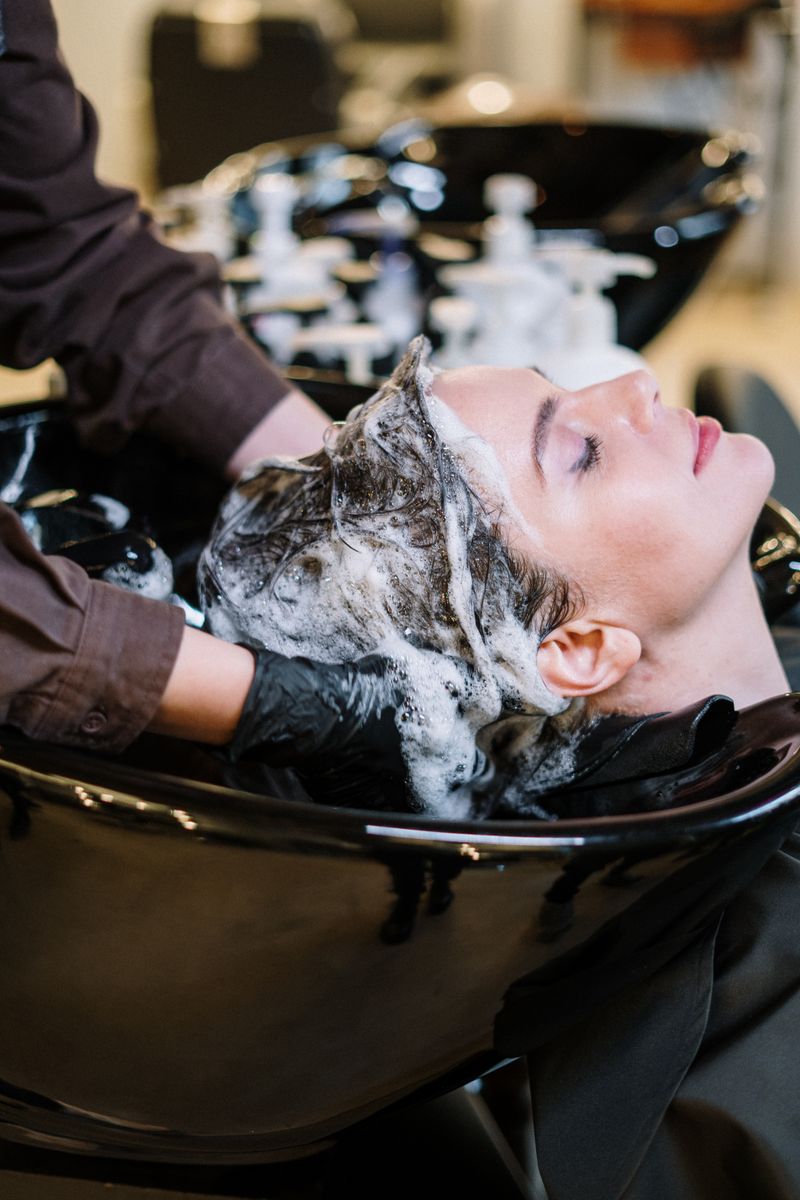
In Singapore's hot climate, sweat and sebum accumulate faster than in cooler environments. Without thorough-but-gentle cleansing, this build-up can block follicle openings and create a chronically inflamed scalp environment. Scalp massages — performed for four minutes daily — have been shown in peer-reviewed research to increase hair thickness by stimulating dermal papilla cells. This is one of the most evidence-backed and cost-free interventions available.
Maintaining a clean, balanced scalp with a sulphate-free formula like Rehues shampoo prevents the excess stripping that paradoxically leads to more sebum production — and keeps the follicular environment healthy enough to support optimal growth. The Rehues colour-safe shampoo is formulated for Singapore's shampooing frequency requirements without compromising scalp pH or colour vibrancy.
Nutrition and Hair Growth: What the Evidence Actually Shows
Hair is produced from the body's available protein, iron, zinc, and biotin reserves. The follicle is a metabolically active structure that deprioritises hair production when the body is under nutritional stress — making the hair one of the first places where nutritional deficiencies become visible.
Iron deficiency is the most clinically significant nutritional driver of impaired hair growth in Singapore women. Research published in the Journal of Korean Medical Science found that serum ferritin levels below 30 µg/L were significantly associated with hair loss. Singapore women who menstruate and eat a predominantly plant-based diet are at meaningful risk of functional iron deficiency that doesn't show up as clinical anaemia but still impacts hair health. A simple ferritin blood test from your GP is the most effective diagnostic step.
Adequate protein intake is equally important. Hair is roughly 95% keratin, and the body cannot manufacture keratin without sufficient dietary amino acid availability. Singapore's food culture is generally protein-rich — chicken rice, fish soup, eggs — but women on calorie-restricted diets or those following strict plant-based protocols may need to pay deliberate attention to protein targets. Aim for at least 0.8–1.2g of protein per kilogram of body weight daily to support hair growth.
Rehues Singapore
Hair Care Made for Singapore
Formulated for colour-treated hair in Singapore's heat and humidity. Shop Rehues today.
Shop Rehues →Practical Steps to Retain Length in Singapore
Length retention is the skill most people never develop because they focus on growth rather than preservation. Your hair grows whether you intervene or not — what you control is how much of that growth you keep. The most impactful practices for length retention in Singapore's context are: reducing heat styling frequency (or using a heat protectant consistently at 230°C and below), detangling on wet hair coated with conditioner rather than dry, sleeping on a satin or silk pillowcase to reduce overnight friction, and trimming only split ends rather than regular blanket trims that remove growth progress.
For colour-treated hair specifically, incorporating a weekly Rehues mask into your routine maintains the hair shaft's elasticity and moisture balance — reducing the brittleness that leads to snap-off breakage at the mid-lengths. Find the right treatment for your hair's condition at rehues.com.
Conclusion: Fix Breakage First, Then Focus on Growth
If you're frustrated with your hair's apparent lack of growth in Singapore, the most likely culprit is breakage erasing your progress rather than a genuine slowdown in the growth cycle. Address the causes — chemical damage, heat stress, scalp health, nutritional gaps — systematically, and length retention will follow. Rehues is built for Singapore's specific hair challenges: climate stress, humidity, and the demands of colour-treated hair. Start with a sulphate-free cleansing routine, add weekly bond repair, and support from the inside with adequate protein and iron. Your hair is growing — you just need to stop it breaking off.
Frequently Asked Questions
Why does my hair seem to stop growing at a certain length in Singapore?
Hair almost never actually stops growing — the issue is breakage matching or exceeding the growth rate. This creates a length ceiling that feels like stagnation. Identify where and why the breakage is occurring: chemical damage, heat, friction, or nutrition are the most common culprits in Singapore.
How can I grow my hair faster naturally in Singapore?
Focus on scalp health through gentle cleansing and daily four-minute scalp massage. Ensure adequate dietary protein and iron intake. Reduce heat styling and chemical processing frequency. Use a sulphate-free, bond-protective routine to minimise breakage and maximise length retention.
Does Singapore's weather affect hair growth?
The climate itself doesn't slow growth, but it creates conditions — scalp congestion, UV damage, humidity-induced cuticle stress — that increase breakage and reduce the quality of hair produced. Addressing these environmental stressors is essential for length retention in Singapore.
What nutrients should Singapore women take for hair growth?
Iron, protein, and zinc are the three most impactful nutrients for hair health. Biotin deficiency is rare in Singapore's food environment. Confirm ferritin levels through a blood test before investing in supplements — targeted supplementation for confirmed deficiencies is more effective than generic hair supplement blends.
How often should I trim my hair to help it grow in Singapore?
Trimming does not make hair grow faster — it prevents split ends from travelling up the shaft and causing more breakage. Trim only when split ends are visible, rather than on a rigid schedule. For chemically processed hair in Singapore, every three to four months is typically appropriate.
Can bleached hair still grow long in Singapore's climate?
Yes, but it requires deliberate bond repair and moisture management. Bleached hair in Singapore's humidity is highly porous and prone to breakage. A weekly strengthening mask and sulphate-free shampoo routine, combined with reduced heat styling, makes long bleached hair achievable.
What is the best product to promote hair growth in Singapore?
No topical product meaningfully accelerates the growth rate — hair grows 1.25cm per month regardless. The most impactful products support length retention by reducing breakage: sulphate-free shampoos, bond repair treatments, and deep conditioning masks are more valuable than growth serums for most people.
How does hair loss differ from slow hair growth in Singapore?
Hair loss involves hairs falling from the root — look for the white bulb at the end. Slow apparent growth is usually breakage along the shaft, producing shorter broken pieces without a bulb. The treatment approaches are different: scalp and systemic interventions for true hair loss, product and habit changes for breakage management.